
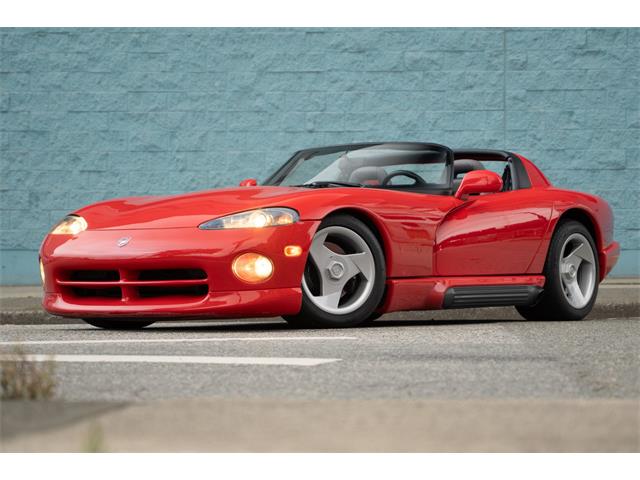
1994 Dodge Viper RT/10: By the Numbers
The Viper really is almost stunningly one-dimensional in pursuit of this image, too. Most domestic muscle cars seek a lowest common denominator of appeal to ensure high take rates and solid margin, but the Viper—especially this, the first-generation RT/10—eschews that. It offers nothing but power and a healthy dose of intimidation. Dodge’s entire development and sales strategy, as far as I can tell, was to sculpt the most phallic fiberglass possible around its massive V10, wrap the whole package up in calf-melting side pipes, and dare all would-be buyers to tame it. There is no attempt to lure in people to whom the car does not appeal. Either you understand it or it’s not for you. And even more polarizing than rudimentary chassis design and the absurdly overkill motor is the lack of safety features. The first-generation Viper has been renowned since its inception as a car that simply does not care about you. We all know the spiel: No traction control, no ABS, no airbags (too much weight!), no stability control, hell, no side windows. You get 400 horsepower sent to the rear wheels, 465 pound-feet of torque at just a touch over 3,500 rpm, a T56 six-speed to attempt to channel it to the pavement, and a prayer to survive. This car is practically custom-built for the few lunatics that took the “no airbags—we die like real men” bumper stickers as a challenge rather than a parody.